Texas A&M Develops Laser-Based Propulsion Technology

Key Takeaways
- 1Texas A&M scientists create metajets for contactless propulsion.
- 2Laser technology could revolutionize space travel efficiency.
- 3Potential applications extend to Earth-based precision manufacturing.
Researchers from Texas A&M University have developed a new propulsion technology utilizing metajets, which works by directing laser beams across specially designed metasurfaces that manipulate light. This technique enables the movement and control of objects without physical contact, showing promise for future space travel without the need for fuel. Initial experiments involved small-scale devices comparable to a human hair, setting the groundwork for larger applications in spacecraft propulsion.
The implications of this laser technology are significant, especially for reducing travel time to distant star systems like Alpha Centauri from hundreds of thousands of years to just decades. Beyond space exploration, metajets could also contribute to advancements in precision manufacturing and robotics on Earth. However, scaling this technology for practical space applications will require further research and experimentation in microgravity conditions.
Related Sovereign AI Articles

AI's Dual Role: Misinformation Challenge and Research Tool

AI Evaluation Costs Surge as Compute Bottleneck Emerges
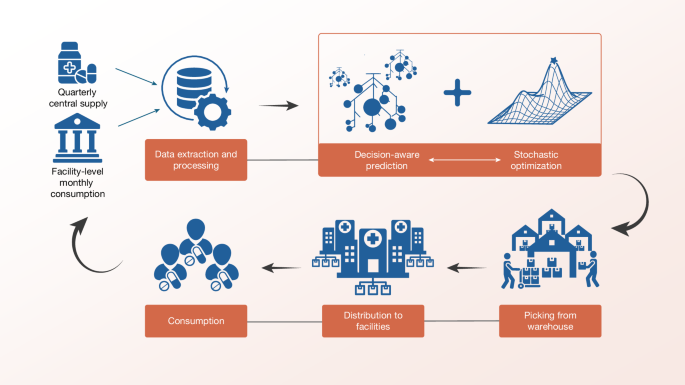
Sierra Leone Deploys Decision-Aware ML for Medicine Access

OpenAI Highlights Math as Pathway to AGI Progress
